Thursday, February 6, 2020

Multiples and Repetition

A few classes ago, we started talking about what makes a powerful image.

What were two strategies we have already reviewed that an artist might use to create a powerful work of art:
Tony Tasset


SIZE/Scale


Pablo Picasso


COLOR

Another strategy artists use to create a powerful image is to work in multiples or by using repetition.  By including many images or objects of the same work the artist makes it nearly impossible for us not to pay attention. 
Tara Donovan 

Artist Glenn Ligon is a contemporary artist who displays his work in galleries and museum spaces. 

Glenn Ligon is an artist living and working in New York. His work explores American history, literature, and society. He is best known for his text-based paintings

Using stencils he creates text in his art
By including repetitive elements, the viewer naturally takes notice.


BY DISPLAYING MORE THAN ONE OF EACH PAINTING, IT GIVES HIS WORK POWER.

Another artist known for working and exhibiting his work in multiples was Andy Warhol
Andy Warhol was an American artist, film director, and producer who was a leading figure in the visual art movement known as pop art. 
He was famous for exploring popular culture in his work, using brands like Coca Cola, celebrities and Campbell's Soup (which was one of his favorite things to eat).  Popular culture --that includes such things advertisements, comic books and movie stars is where Pop Art gets its name.
We recently opened the printmaking studio.  Warhol used printmaking to create repetition of his work.

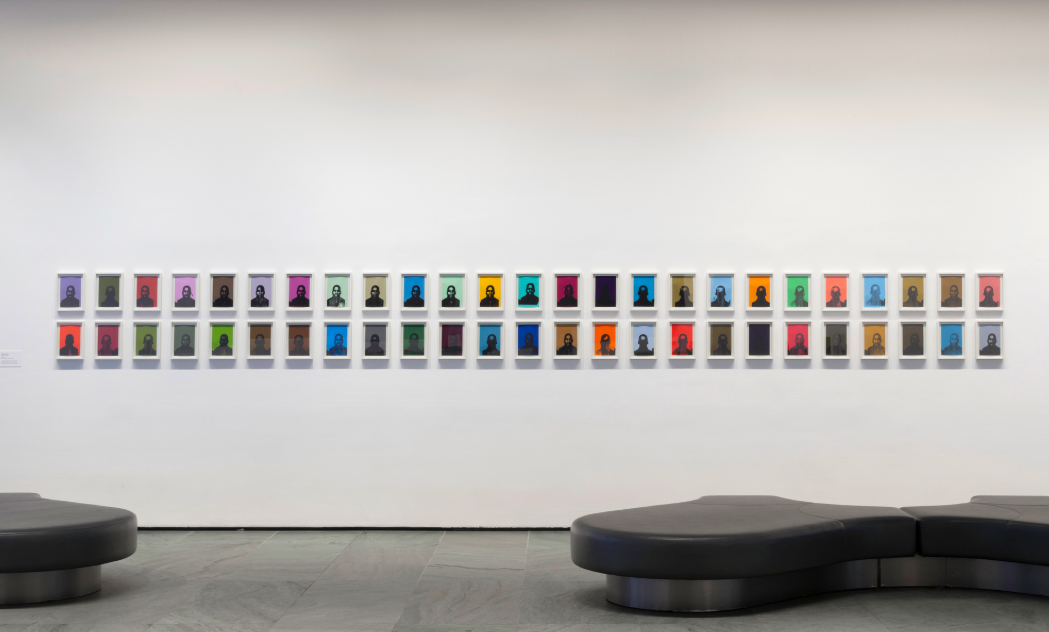
Lorna Simpson is an African-American photographer and multimedia artist.  

 She collects old photographs from photo booths and displays them as a collection.
Would you notice this work as much if it were one small photo hanging on the wall?
 Closeup

Allan Mccollum
Ai Weiwei


A lifejacket becomes a powerful image when it represents the lives of refugees.  Thousands of life vests bring attention to a humanitarian crisis.  Would one life jacket be as powerful?  Art can bring attention to events happening around the world.


Did any of you get a chance to see the Ai Weiwei exhibit?  Forever Bicycle was a sculpture in the exhibit.  The metal sculpture was created by using the same object repeatedly.
As you think about your art:

Will making multiple pieces of art help you best express your idea?  Will it make your art powerful?

Which studio in this room might help you to create a repetition of your ideas?

Wednesday, January 29, 2020

Right tool for the job

Lesson

Quality Work -- Artist Trading Cards

Meramec Artists have the opportunity to participate in an artist trading card swap hosted by
mini matisse


When creating any piece of art students are encouraged to make QUALITY work.


Tuesday, December 10, 2019

color

We have been examining ways artists create POWERFUL works of art.
Sometimes we see a work of art and we might say, "Wow"!  or "Whoa, look at that".  "That is beautiful" .  
Or the artwork might leave us wondering or thinking; days, weeks, months or even years later.  There also is art that we might pass by or think "meh, that's nice" and not give the art a second thought.

We have looked at size.
 Now Let's look at how artists use COLOR.


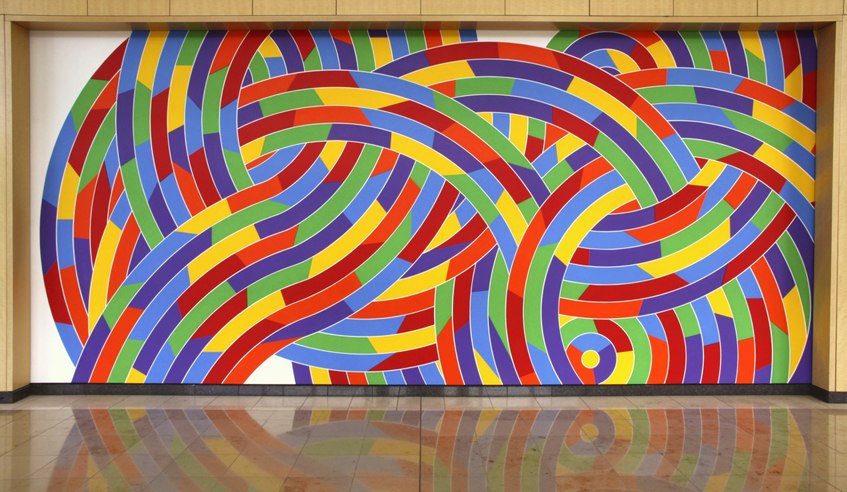
Sol Lewitt
American artist whose work provides a link between Minimalism and conceptual art. 

Conceptual art is art for which the idea (or concept) behind the work is more important than the finished art object


Polly Apfelbam 


-is an American contemporary visual artist, who is primarily known for her colorful drawings, sculptures, and fabric floor pieces, which she refers to as "fallen paintings". She currently lives and works in New York City, New York.


Color can be a powerful tool in art.  
Color can give your artwork a mood or feeling.  How do these paintings by Pablo Picasso make you feel?  What is the main color you are noticing in Picasso's work?
Blue, Green and Purple are COOL COLORS that can create a calm, melancholy or sad feeling in your art.
How do the colors of these Fiber works by artist Janet Echelman make you feel?


Warm Colors such as RED, Yellow and Orange can give a happy, upbeat, energetic or excited feeling.  

by the colors you choose, you have the power to affect how the viewer feels when they look at your art 


Today you will have a Color Mixing Skill-builder.  Turn to the painting page in your book.  Draw a circle like the one you see below:

You will be given the primary colors along with black and white.  You will start by painting yellow, red, then blue.  you will then mix yellow and red to make orangeyellow and blue to make green and blue and red to make violet.  
Image result for color wheel handout

Monday, December 2, 2019

SIZE --Tiny Art Show

Over the next few art classes we will be considering what makes a powerful work of art.  Today we will look SIZE and how it can impact how a work of art is observed.

Some artists choose to work BIG and some choose to work small.   As an artist you get to choose the size of your work.
Claes Oldenburg's "Giant Three-Way Plug" has sat on the St. Louis Art Museum grounds since 1971


Why do you think an artist would choose to work LARGE?
Claes Oldenburg is an artist known for his large scale sculptures or recognizable everyday objects.


These are a few more LARGE scale sculptures you may have seen here in St. Louis.


If an artist would work LARGE, then it would come as no surprise that some artists like to work s m a l l 
Image result for tiny art"


Why would an artist work small?
Would a viewer spend more or less time looking at small art?  How about, would the viewer look deeply at the work? 


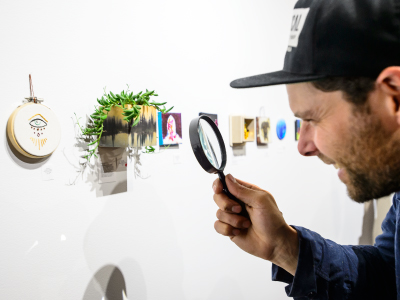
We will be creating a Tiny Art Show at Meramec using the lower level. We will have a Gallery wall that will feature your work but as you will see, some art might be placed at in various spots 

These are photos of a special art project called TINY ART SHOW.  Artists work in a small scale and the viewer must get close to inspect the art.
Every student will be working within the dimensions of a Post-it Note.  
 Your work will be High Quality, remember this is a show and your art will be on display.

Sign your name in the bottom corner with an extra-fine Sharpie.

As you think about your own art, will you consider size?

Do you like to work small or large?

Does size make an impact in how the viewer experiences your art?