Tuesday, March 28, 2017

Working in a Series

Last week, we looked at the work of Carrie Mae Weems.  We used the activity Mirrors and Windows to view a selection of photographs from her Kitchen Table Series.

What is a Series?
 Series - a group or a number of related or similar things, events, etc...arranged or occurring in order or succession; sequence.


Why would an ARTIST choose to work in a series or make a series of work?


The Impressionist artist Claude Monet created many series of art.  Often his series studied daylight in nature.  One of his most famous series is Waterlilies.  There are approximately 250 paintings in this series. (We have a few waterlily paintings in our St. Louis Art Museum!)


Here are a few examples of other artists that have created a series of work.  

Photography is a natural way create a series of work as we saw in Carrie Mae Weems' art.

Printmaking is also a great way to explore an idea, shapes, an image, colors, or a technique.
Artist Ellie Malin works in a series.  As you look at her work, see if you can identify a theme.


Penelope Umbrico is an artist / photographer.  She is best known for collecting images found using search engines and websites.  You will notice in her series of work, repetition and a unifying theme within her work.


What do you think she searched for on the computer to come up with this work?


You had homework!  Someone at home was to email me an image of a kitchen table or a space where you gather.  This will be our theme for an art piece inspired by the work of artist Penelope Umbrico.  Imagine a hundred tables side by side in a photo mosaic!  As we view one another's photos, we will make connections.  We will find that we have experiences in common.   And we will gain perspectives into someone else's experience or story.


Many of you have explored an idea, a theme, character, or concept and may not have realized it.

Will working in a series be the best way for you to express and idea?

By creating a series of work, what might you learn about your ideas?   

Will one idea lead to another?

By working in a series will you improve your artistic skills?


Monday, March 13, 2017

Perspectives, Experiences, and Stories

Artists allow us to gain perspectives and viewpoints beyond of ourselves.

*How can artists help us to understand another person's story?
*Why is it important to care for or about other people?
*What can we learn from another person's experience?
These are a selection of photographs called, The Kitchen Table Series, 1990,  from artist Carrie Mae Weems.

What are some events that happen around a kitchen table?


We are going to do an activity called Mirrors and Windows.

If you see something in a photo that looks familiar to your own life, it would be a mirror.
If you see something in a photo that doesn't look familiar to your own life, you would say it's a window.

When you look at each photo, decide if it's a mirror or window.
Raise your hand and explain why.


Many of you connected with an artist you have never met.  Many of you saw into the experiences of another person.  Through our discussion, many of you realized you have had similar experiences.  Even though we are all individuals, we have more in common than we realize.

Sunday, March 5, 2017

A little bit of this + a little of that

Today we are going to have 3 micro-lessons rather than a mini-lesson.

Peer Conferring Sheet
Mid class you will confer with another artists.  Staple this inside the last page in your assessment book.  


Jaz Gloss Tempera Paint
A new medium to explore.  Located away from traditional Tempera paint, Gloss paint will be stored in the marked container.  9 bottles are to be returned to the container at the end of class.  This is the only paint to be used with the plastic trays.

Works well on paper, clay or wood.  Notice the shiny quality.

Transparency Film Drawings
Create a drawing on paper.  Add color, pattern and detail.


Staple a Transparency film on top of your drawing.

Draw on the Transparency Film with Dry Erase Marker


*How could you incorporate this technique into Stop Motion Studio


Tuesday, February 21, 2017

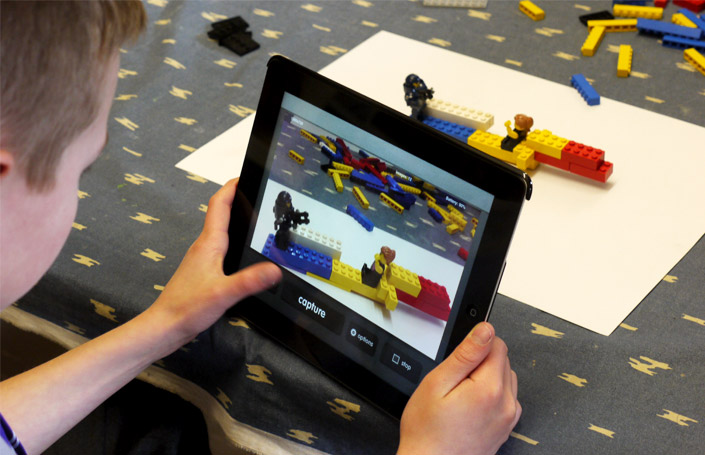
STOP M O T I O N


How many of you have ever tried STOP MOTION ANIMATION?


For the uninitiated, stop motion animation is a film making technique that makes inanimate objects appear to move on their own.

To make it work, you place an object in front of a camera and snap a photo. You then move the object a tiny bit and snap another photo. Repeat this process twenty to ten thousand times, play back the sequence in rapid progression, and the object appears to move fluidly across the screen. (http://tinkerlab.com/)
MORE IS BETTER!  MORE, MORE, MORE PHOTOS!


Stop Motion Options:


Dry Erase Board Animations


1056 PHOTOS!  Wow!

12 frames/photos = 1 second
Lego Animation:


Paper animation:


Claymation:  

Create a Setting...use cardboard, paper, pipe cleaners, etc.


With Permission from home, you may bring in Stikbots.  Art is required!


Is stop motion the best method to express your idea?


Sunday, January 29, 2017

Sunday, January 22, 2017

Empathy

This year we have been looking at the big question, What Do Artists Care About and Think About When They Make Art.

Artists care about people.  Artists can paint, draw, or sculpt their feelings. They express the emotions of others in their art.  When we think about the feelings of others and try to put ourselves in their situation, we are being empathetic.  What must it feel like to be in their place at that moment?

Empathy- the ability to understand and share the feelings of another.


One of the first steps of Empathy is to pay attention to a person's facial expressions, body language and the feelings one is expressing.  Once we have determined the feeling of our friend, we have the chance to connect with our friends, classmates, teachers, brothers and sisters and parents in an empathetic response.    

Let's look at a few works of art.  What do you feel or what emotions are these artworks suggesting?


Alice Neel
Mark Rothko

Kerry James Marshall
 Wassily Kandinsky
 Kathe Kollwitz


When we look at art, without realizing it, our brain is responding with empathy to the subject in a work of art.  We almost simulate (pretend to feel) in our mind what we are seeing in the work of art.
(bigthink.com)

 Pablo Picasso
 Kehinde (Ka-hin-day) Wiley
Ann Hamilton

Today Mr. Henderson and I want to talk with you about Empathy.  There is a good chance you are already familiar with the book, Stand in My Shoes by Bob Sornson.  

When we refer to Empathy, we might say, "stand in my shoes".

*What does the expression, Stand in My Shoes mean to you?

*What are some situations where you need or would like your friends and family to have empathy?

*When is a time you displayed empathy?


You will design a shoe with the concept of Empathy in mind.  While you are designing your shoe and writing a statement about empathy, I will have you come up to make a clay empathy pendant. 


We will make your shoe print into a pendant.  The pendant will serve as a reminder to put yourself in someone's shoes.