Coming up is International Dot Day. September 15th -ish
Many of you are familiar with Peter Reynolds' book, The Dot. Think about the message in The Dot, why would a Dot have its own day?
International Dot Day takes place to Celebrate Creativity,
Courage & Collaboration!
Imagine the power and potential of millions of people around the world connecting, collaborating, creating and celebrating all that creativity inspires and invites. Today you will be using your talents, gifts and energy to move the world to a better place, you will MAKE YOUR MARK!
Before we get started, Let's look at some artists that used Dots to "make their mark".
Yayoi Kusama is one of the world’s most influential artists with endless energy for creation with colors, patterns, art installation and love for fashion.Since the age of ten, she has been obsessed with polka dots, at first covering her drawings, then later canvases, walls, household objects and even her assistants in them.Known for her iconic dots, pumpkins and infinity rooms, her art has captivated millions all over the world
Yayoi Kusama "Love Is Calling"
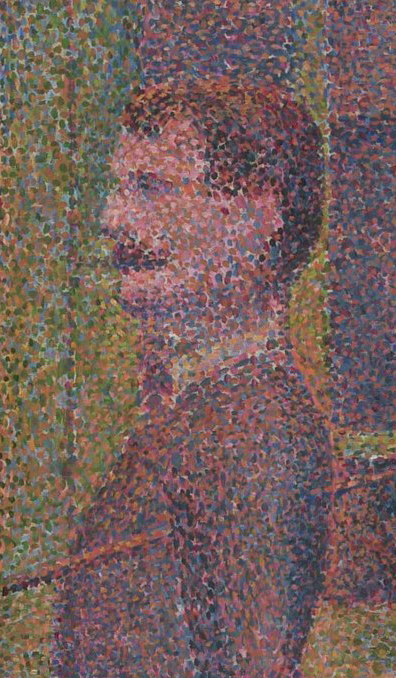
Some artists use large dots and some go small....like George Seurat and other artists that use the technique we call Pointillism. When an artist paints with dots of paint rather than long brushstrokes of paint we call this Pointillism. Dots of color side by side visually mix as you view the art
Parade de cirque
Detail from Seurat's Parade de cirque, 1889, showing the contrasting dots of paint which define Pointillism
Vassily Kandinsky filled his art with shapes. Vassily has many paintings filled with circles. A circle is really just a big dot!
wassily kandinsky circles in a circle 1923
Vassily Kandinsky, 1926 - Several Circles
Let's look at a few more...
Almas Thomas painted colorful circles filled with bold colors inspired by the hues in her garden. I see a dot. Do you?
Alma Thomas, The Eclipse, 1970
Alma Thomas, Springtime in Washington, 1971
Lunar Rendezvous—Circle of Flowers Alma Thomas1969
Roy Lichtenstein created works in the style of comic books. His images are filled with dots of color like the ink of printed comics
Roy Lichtenstein, Crying Girl
Roy Lichtenstein was famous for his bright and bold paintings of comic strip cartoons as well as his paintings of everyday objects. He was one of a group of artists making art in the 1960s who were called pop artists because they made art about 'popular' things such as TV, celebrities, fast food, pop music and cartoons.
Explosion 1965–6
Roy wanted his paintings to look like they were printed rather than hand-painted and he used a newspaper process invented by Benjamin Day, an American illustrator, of printing shades of color with tiny dots, Ben-Day dots.
Howardena Pindell (April 14, 1943) is an abstract artist from Philadelphia, PA. After studying painting in college, she worked at the Museum of Modern Art, and currently teaches at the State University of New York.
Howardena Pindell, Untitled 6F, 2008-9, mixed media on paper collage
Howardena is best known for her abstract collages made of layered paper dots. To create her collages she uses a process known as destruction/reconstruction. What do you think this means?
Caption Howardena Pindell, Untitled #4D, 2009
Untitled #88 (Dragon)’ (2007)
Your Turn:
Kindergarten
Linear oil pastel resist
First Grade
Monochromatic Collage
Second Grade
3D folded paper circles
Third Grade
Concentric circles
Fourth Grade
Zentangle Dots on colorful paper
Fifth Grade
Analogous Color mixing
We will put all our dots together to create a collaborative mural inspired by Art with Mrs. E and her talented students.
This year I hope you discover the power and potential of creativity in all you do!
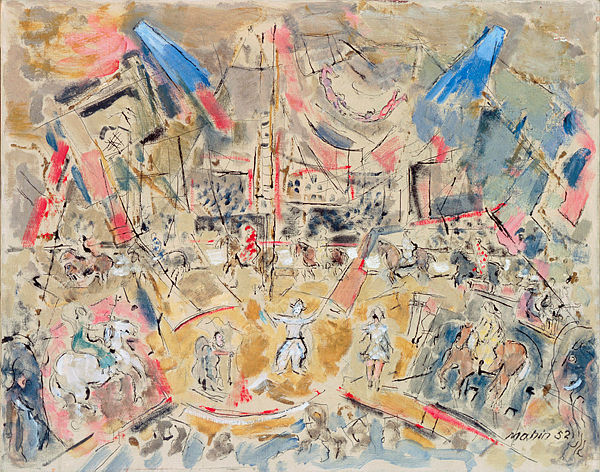
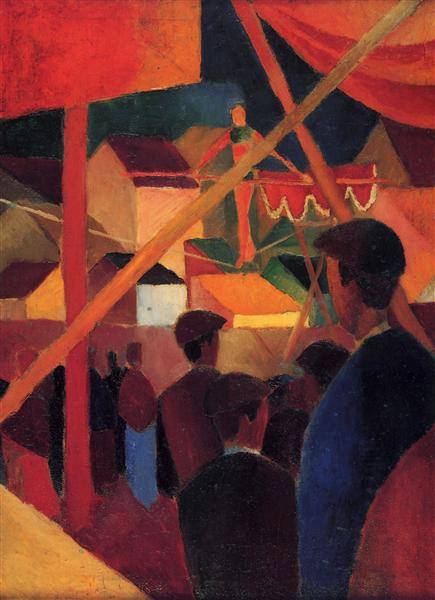
For several decades and especially during its peak of popularity, a group of artists were inspired to make art about the circus.
The Circus No. 1, John Marin, 1952
Think of the subjects that inspire your work.
Are they things or events you are interested in?
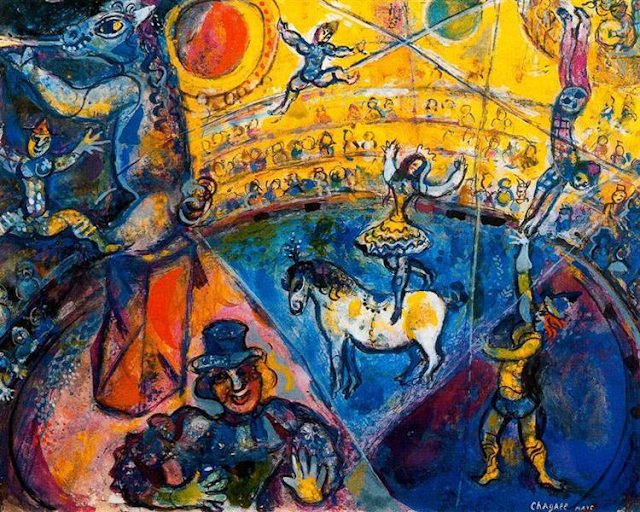
The circus, 1964 - Marc Chagal
By the late 1880s, nearly 150 years ago, the circus was a new venue had become a favorite subject for artists
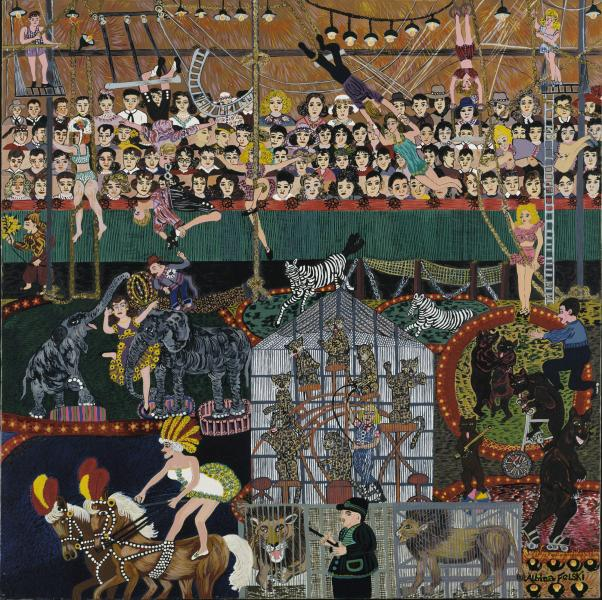
Albina Felski, The Circus, 1971
Some artists captured the spectacle of the circus, the performers and the animals
Marc Chagall, Lithograph, Le Cirque (The Circus), 1967
Let’s look at art where the performers are the subject!
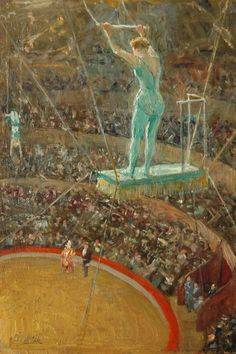
The Circus, George Bellows 1912
Circus Horse Rider
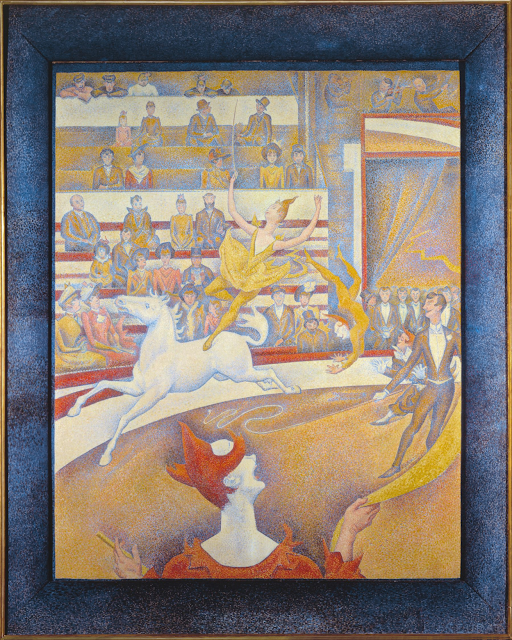
Remember the painting we looked at made with dots??? Well this painting, Circus, was the third panel in a series by the same artist Georges Seurat. He painted the popular attraction of the modern city Paris and its late-night entertainment also in DOTS!
The Circus Georges Seurat 1891
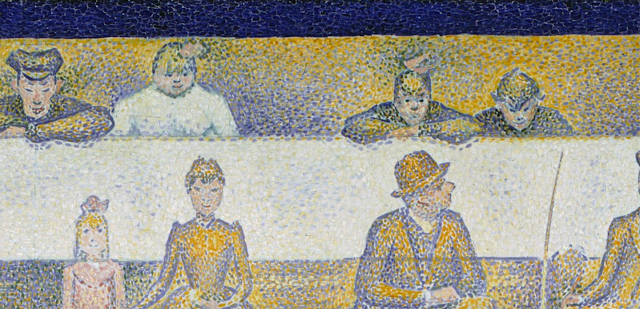
A close up detail of two women enjoying the circus.
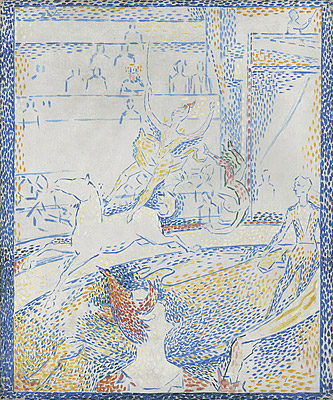
The circus (sketch) 1891
Seurat's piece is intended to evoke happiness. Seurat's use of bright colors evoke positive feelings for the viewer. You can choose colors that feel happy, energetic, upbeat. This was a sketch for the artwork we just looked at
Details close up. Notice the dots of paint. This is called Pointillism
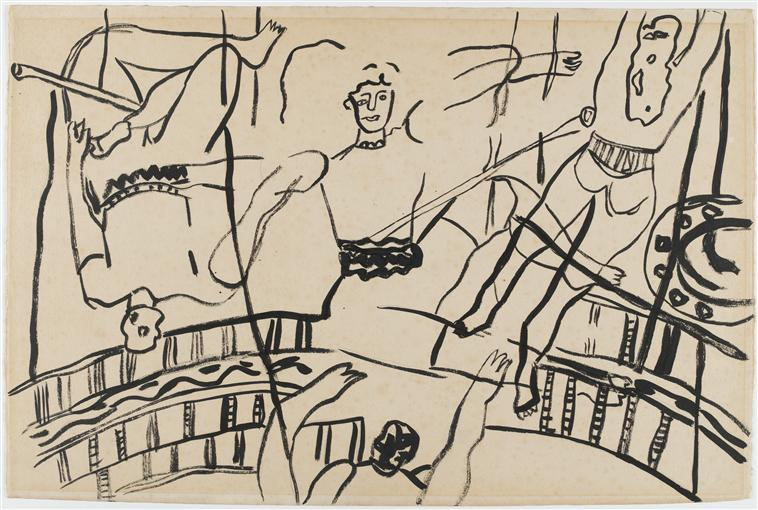
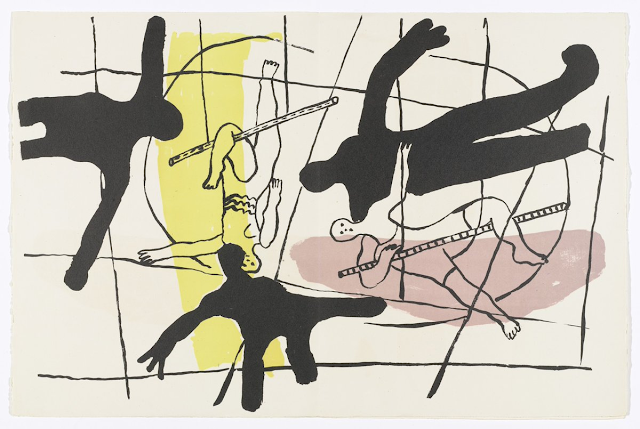
The circus was a space that inspired works throughout Fernand Léger’s four-decade career.
How many years is four decades?
The Performers were important to the circus and Fernand captured them in his colorful art.
As a boy, Fernand had been thrilled by the touring circus troupes that would pass through Argentan, his hometown in rural France. ‘The big top,’ he wrote in 1924, ‘is an absolutely marvelous world.’
The acrobats, study for the circus
Like Fernand, each of the circus performers was an artist skilled in his or her act; much like the modern artist
What is a VERB? What VERBS can you name in this work?
This looks like the composition we JUST saw.
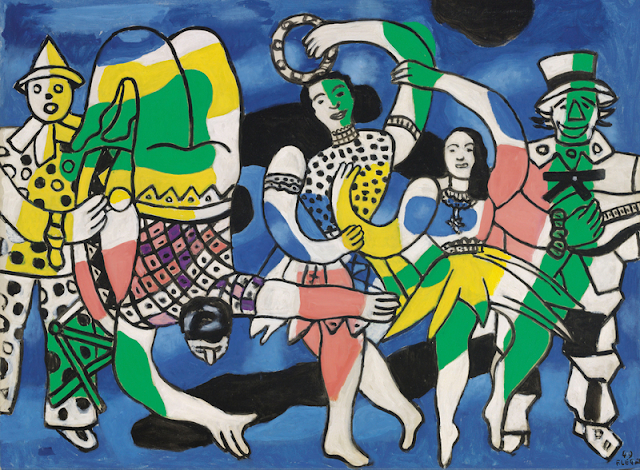
Sometimes Fernand made more than one version of his art keeping the subjects and composition the same but changing the colors or materials.
Fernand Léger (1881-1955) La grande parade (Le Cirque) 1949
And here are some of those SAME circus characters again. If you like something you’ve made, try to make another version or iteration
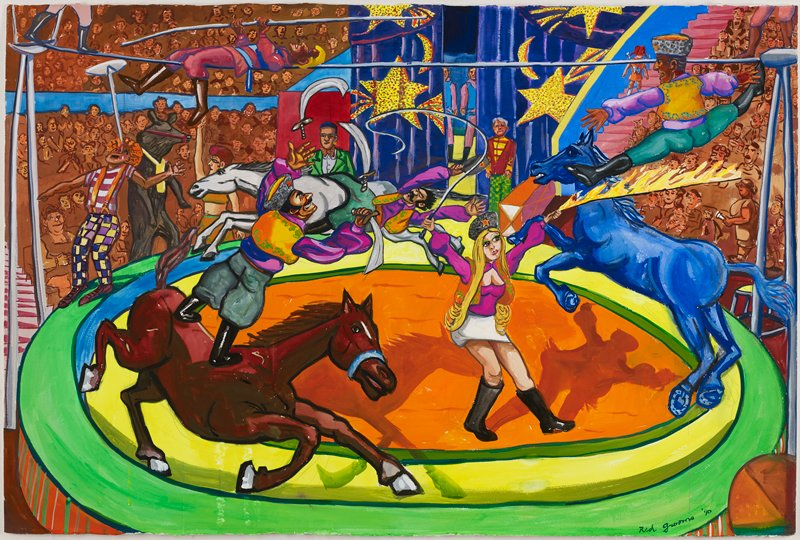
Leningrad Circus, 1990 Red Grooms
Charles "Red" Grooms is an American artist. Much of his work shows American life in a fun humorous way. Grooms also made a series inspired by his travels. This artwork was inspired by Red’s memories and interactions with other cultures. Leningrad Circus is based on his trip to Russia
Acrobats at the Cirque Fernando
(Francisca and Angelina Wartenberg)1879
Pierre-Auguste Renoir
Children even performed at the Circus. In this painting here we see two little circus girls Francisca and Angelina Wartenberg, who performed as acrobats in Paris. they have just finished their act and are taking their bows. One sister turns to the crowd, pleased with its approval, while the other faces us with an armful of oranges, a rare treat that the audience has tossed in tribute
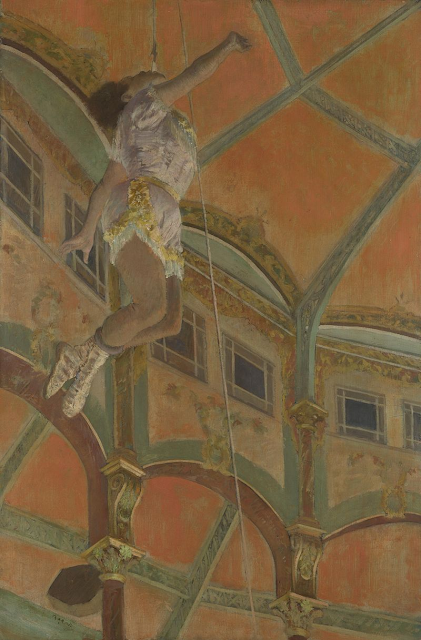
Miss La La at the Cirque Fernando
Edgar Degas. Painted in 1879
At the exact same Paris circus as the two sisters we just looked at, The acrobat Miss La La caused a sensation when she performed. Here she is shown suspended from the rafters of the circus dome by a rope she bites between her teeth. We see the circus performer as the audience would have done, gazing up at her dangling from above.
Pablo Picasso even got into the act. He painted these traveling Spanish circus performers that he befriended at the Paris circus. He even painted himself into this artwork at the harlequin.
Even though this painting doesn’t look especially happy, it was done during Picasso’s Rose Period, a time in Pablo’s life where his mood was lifting and he was using warmer and happier colors.
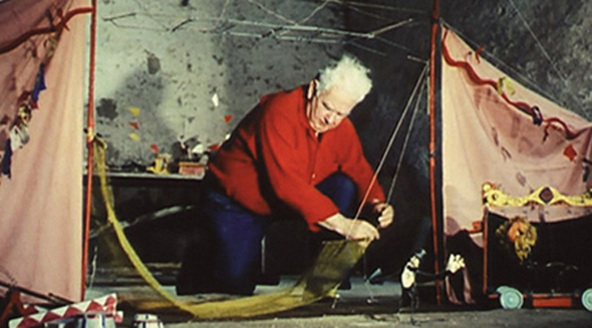
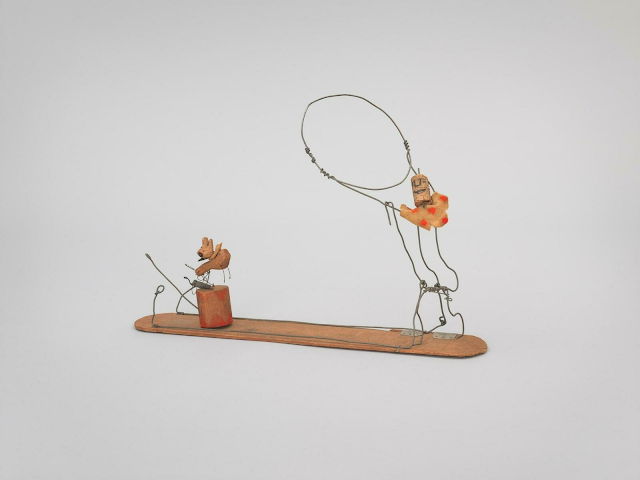
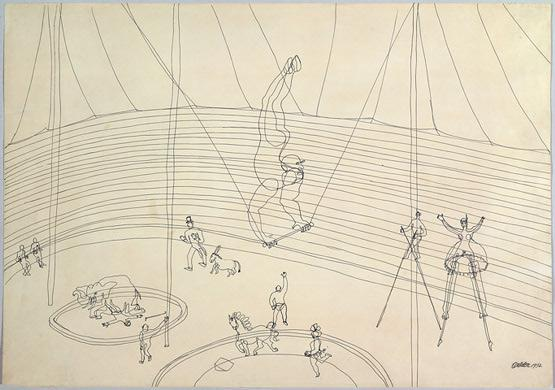
Alexander Calder was also inspired by the Circus. He made circus performers, animals and an entire performing circus artwork using wire, and other bits and pieces of material like cloth, yarn and wood.
Let’s look at the Circus ANIMALS through the sculpted work of Alexander Calder
Alexander made some of his own toys as a child. Many were mechanical. He used corks, string, pieces of metal and wire. He created a duck that rocked when tapped and a train that ran down a track You may see the inspiration of his childhood in this work of art. Alexander Calder created a model of a circus using various found objects but mainly wire and wood. It’s a kinetic sculpture. When we say something is KINETIC that means it MOVES. There are performers, contortionists, sword heathers and lion tamers and lots of animals.
Horses, Horses, Horses
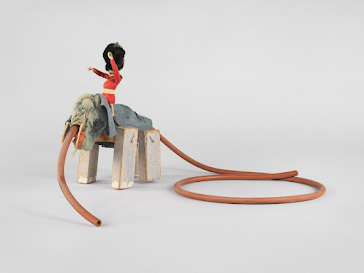
Bring on the ELEPHANTS
Circus Clown. What animals do you recognize here?
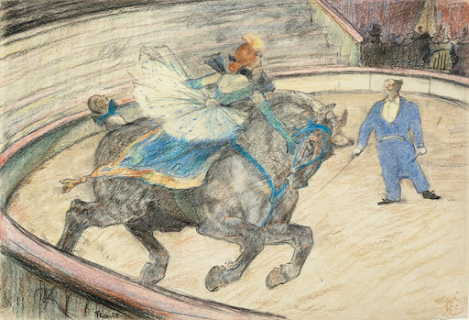
At The Circus Fernando, Rider On A White Horse, 1888 Henri de Toulouse-Lautrec
Think of the ANIMALS you’d see at the Circus
more horses by Henri
Will popular events and past times inspire your work?
Is Kinetic art, art that moves, the best way to express yourself? These artists used wire, paint, and pastels. What materials help you to best express your idea?

 Since the age of ten, she has been obsessed with polka dots, at first covering her drawings, then later canvases, walls, household objects and even her assistants in them.
 Known for her iconic dots, pumpkins and infinity rooms, her art has captivated millions all over the world